
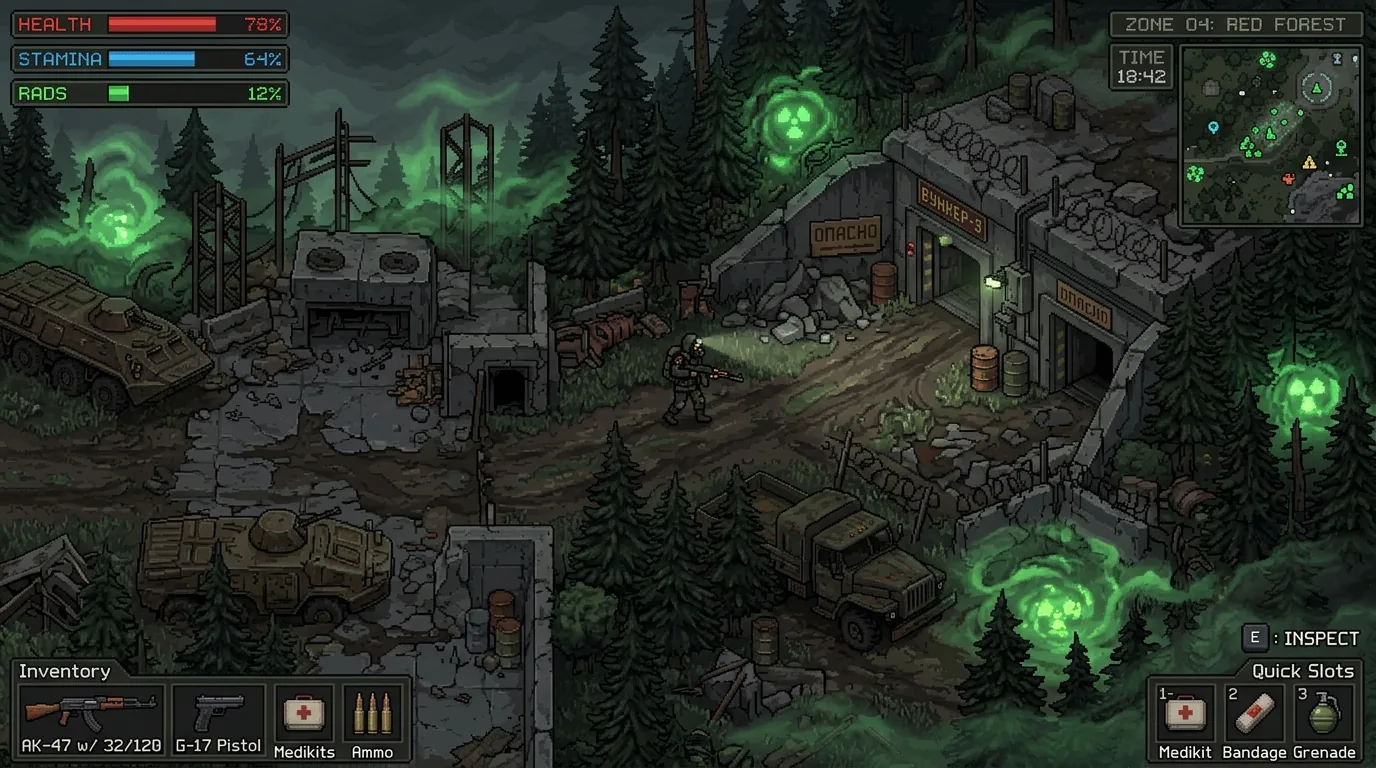
Scavland's handcrafted post-Soviet bunker complexes combined with dynamic green Mist anomalies
Side-by-Side Comparison Matrix
| FEATURE / MECHANIC | SCAVLAND (2026) | ZERO SIEVERT (2022) |
|---|---|---|
| World Structure | Hybrid: Handcrafted surface zones (Zalesye) + Procedural multi-level Soviet bunkers. | Fully procedurally generated surface wilderness maps (Forest, Camp, Mall). |
| Gun Customization | 300+ Modular Attachments: Gas blocks, handguards, triggers, optics, and suppressors altering real ballistics. | Modular attachments with fixed slot limits and stat modifiers. |
| Weapon Reliability | Harsh Malfunctions: Stoves, feed failures, and catastrophic receiver destruction below 30% durability. | Durability penalty to accuracy; simple repair kit restoration. |
| Environmental Hazard | The Dynamic Mist: Living radioactive fog that mutates wildlife, blocks vision, and requires filter cycling. | Static radiation pockets and anomalies scattered around maps. |
| Faction Social System | 10 Interactive Factions: Complex contracts, ideological wars, safehouse outposts, and black markets. | 3 primary factions (Green Army, Loners, Crimson Corporation). |
| Combat & Ballistics | Realistic recoil recoil compensation, ricochet physics, and mandatory cover fire (Melee is strictly secondary). | Twin-stick arcade shooter mechanics with cone-of-fire spread. |
| Multiplayer / Co-op | Single-player in Early Access; no co-op is announced in the official announcements we hold. | Strictly single-player only (confirmed no co-op). |
Origin & Design Heritage
In a detailed 6-year development retrospective published on the Steam Community, the lead developer of Scavland revealed that the team grew from 3 to 15 developers over half a decade. Rather than copying modern extraction shooters, Scavland pulls design DNA from legendary classics:
- Tibia & Ultima Online: Spatial awareness, unforgiving corpse-run economics, and open-ended wasteland interactions.
- Darkwood: Psychological tension, field-of-view cone mechanics, and terrifying ambient night encounters.
- Escape from Tarkov: Realistic weapon modding, chamber inspection, and detailed cartridge ballistics.
- S.T.A.L.K.E.R. & Metro: Bleak Eastern European post-cataclysm atmosphere, anomalous weather phenomena, and faction skirmishes.
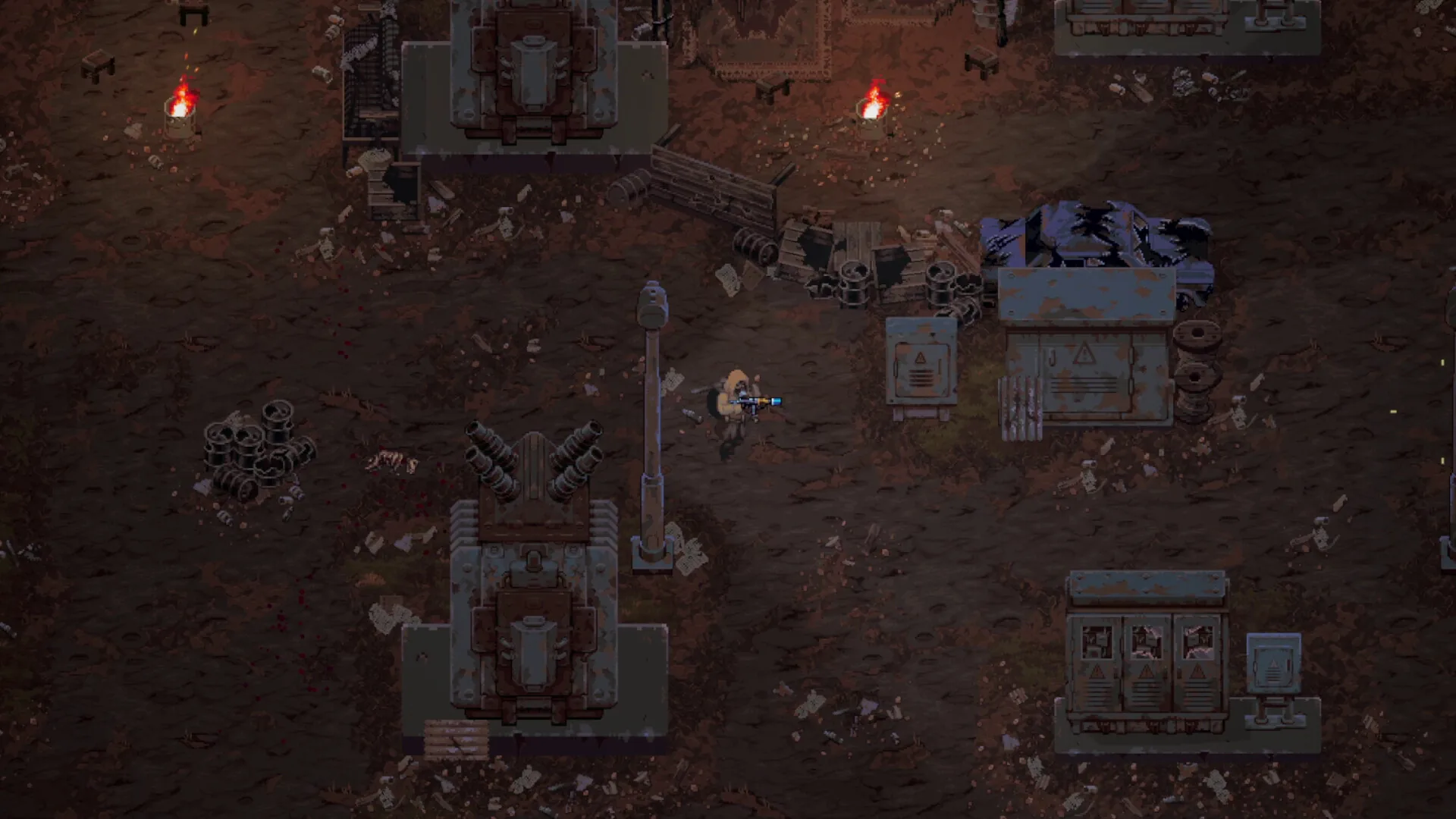
Tactical firefights demand positional awareness, bullet penetration knowledge, and cover management
The 3 Biggest Mechanical Differences
1. The Living Mist vs. Static Radiation
In Zero Sievert, radiation is a geographic puzzle: equip a geiger counter, steer clear of glowing rocks, or pop anti-rad pills. In Scavland, The Mist is a dynamic global event. When anomalous fog rolls into the sector, outdoor visibility drops to near-zero, infected mutants become hyper-aggressive, and your gas mask filters begin depleting by the minute. Surviving requires portable anomaly scanners, emergency shelters, and prepared extraction routes.
2. Catastrophic Weapon Degradation
Gunfights in Scavland carry high mechanical risk. Firing scavenged weapons in poor condition can result in stovepipe jams, failure to eject, or even catastrophic receiver explosions that permanently destroy the firearm and injure the player. You cannot simply sprint into high-tier zones with 15% durability junk guns.
3. Handcrafted Environmental Storytelling
While Zero Sievert excels at fast-paced procedural roguelike runs, Scavland's surface overworld of Zalesye is deliberately handcrafted. Every ruined Soviet radar station, collapsed bridge, and underground bunker entrance has intentional environmental narrative, tactical sightlines, and hidden stashes.
The Verdict
If you love Zero Sievert's core loop but crave deeper immersion, true weapon building, and the terrifying survival atmosphere of Darkwood and S.T.A.L.K.E.R., Scavland is the exact natural evolution you have been waiting for.